

Is another mac and cheese recipe going to change your life? Probably not.
But MAYBE!!! so in the interest of just in case it does, here’s the recipe.
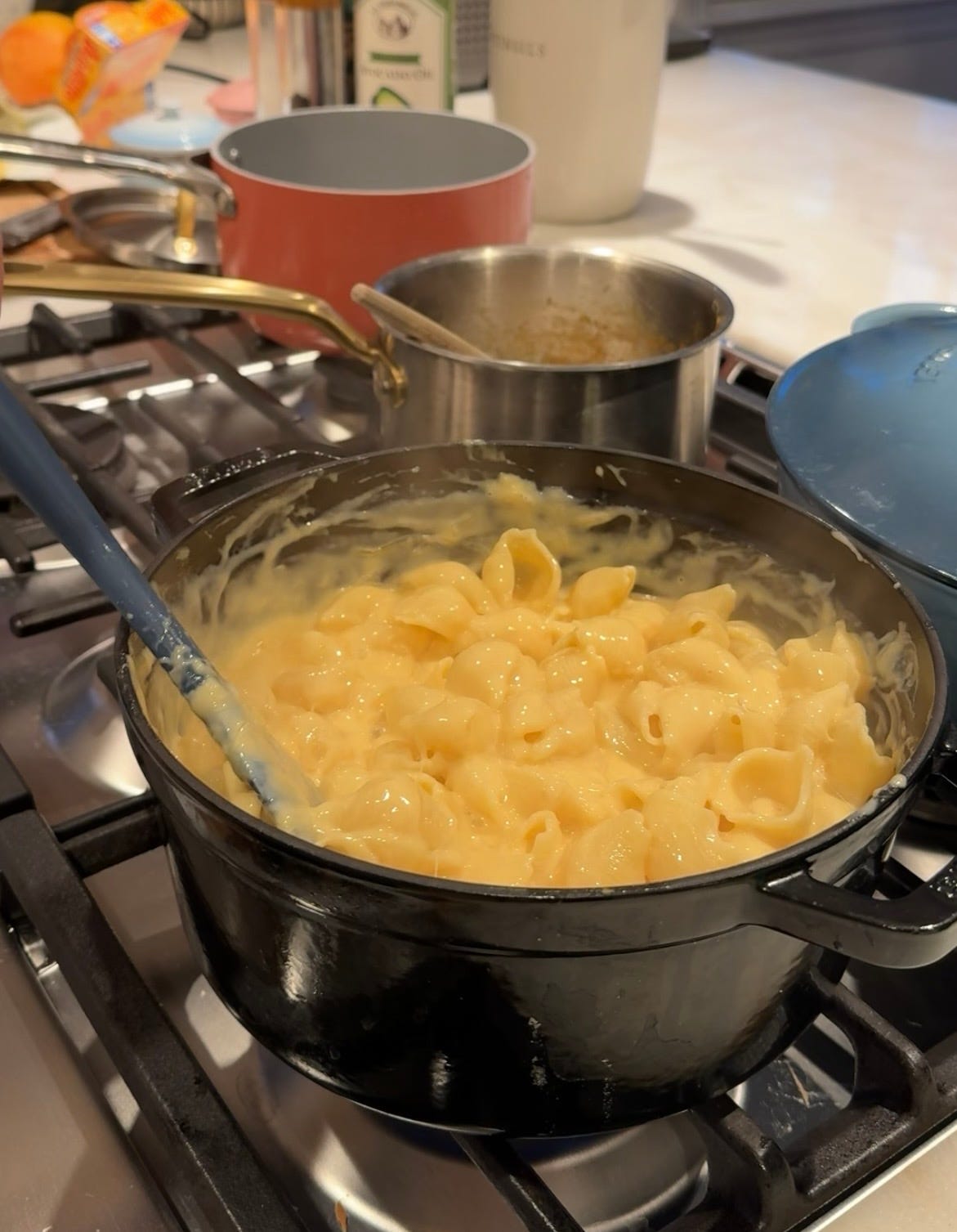
Caramelized shallots melt into the cheese adding a savory sweetness to every bite. And yes I’m going to insist you use shells for this recipe. Everyone commented on how much they love shells for mac & cheese which only validates my opinion that it’s the only acceptable pasta shape for this situation.
Time: About 1 hour
Serves: About 6-10 depending on if it’s a side or the main show.
I made this for our friendsgiving with 8 people and we had leftovers!
Ingredients
For the Caramelized Shallots
6–8 shallots, peeled and thinly sliced, about 4 cups
3 tablespoons salted butter
Pinch of salt
Water or broth, as needed for deglazing
For the Mac + Cheese
1 (1lb) box medium pasta shells
4 tablespoons salted butter
1 cup half-and-half
8 oz Gouda, shredded or cut into small cubes
4 oz white cheddar, freshly shredded
8 oz Velveeta, or 2 Velveeta Fresh Packs
1 cup reserved pasta water, as needed
Lots of freshly cracked black pepper
Instructions
1. Caramelize the Shallots
Melt 3 tablespoons salted butter in a small saucepan or pot over low heat.
Add the sliced shallots with a pinch of salt and stir until coated in the butter.
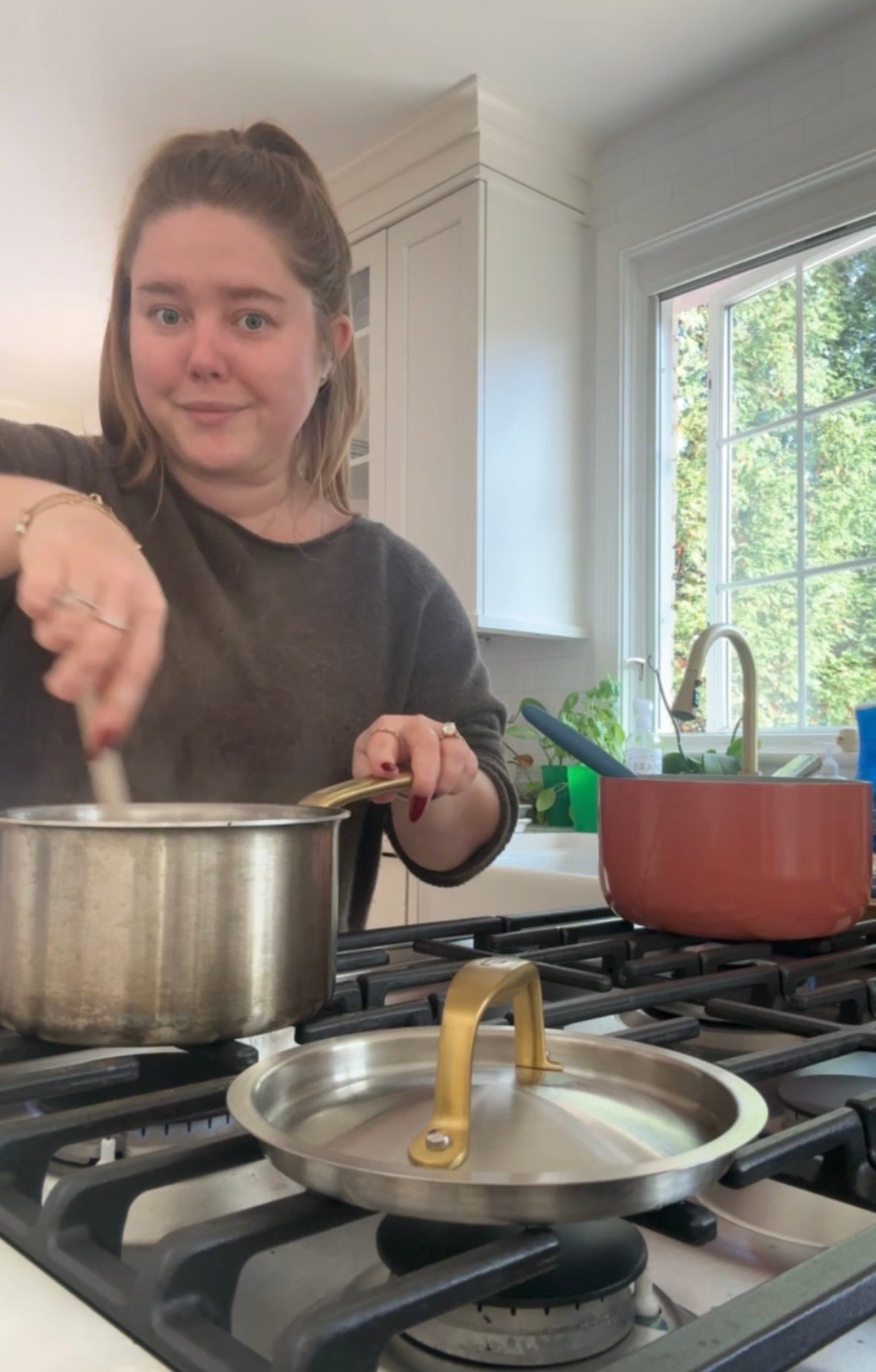
Cover and cook over low heat for about 45 minutes, stirring every 5 minutes or so.
The shallots will gradually soften, collapse, and turn from translucent to golden and eventually a deep amber color.
If they begin to crisp or brown too quickly, lower the heat. If the bottom of the pot starts to develop browned bits, add a small splash of water or broth and scrape them up.
The finished shallots should be very soft, jammy, and deeply caramelized.
2. Cook the Pasta
While the shallots finish caramelizing, bring a large pot of well-salted water to a boil.
Cook the medium shells until al dente, according to the package directions.
Before draining, reserve 1 cup of pasta water.
Drain the pasta and set aside.
3. Make the Cheese Sauce
In a large pot or Dutch oven, melt 4 tablespoons salted butter over medium-low heat.
Add the 1 cup half-and-half and let it warm gently. You don’t need it to boil.
Add the Gouda, white cheddar, and Velveeta.
Keep the heat on medium-low and stir frequently until all of the cheese has completely melted and the sauce is smooth.
Avoid high heat here — gentle heat will give you a much smoother cheese sauce.
4. Add the Shallots
Fold the caramelized shallots into the cheese sauce.
Stir until they’re evenly distributed and begin to almost melt into the sauce.
5. Add the Pasta
Add the cooked shells and a splash of reserved pasta water.
Stir until every shell is coated in the cheese sauce.
Add more pasta water, a little at a time, as needed until the sauce is creamy and glossy. Keep it slightly looser than you think you need — the sauce will continue to thicken as it sits.
6. Finish + Serve
Finish with lots of freshly cracked black pepper.
Taste before adding additional salt, since the salted butter, cheeses, and pasta water all bring plenty of seasoning.
Serve immediately while creamy and hot.
Tips
Give the shallots time. Forty-five minutes might feel like a commitment, but low and slow is what gives them their deep, naturally sweet flavor. Please do not add balsamic or sugar.
Don’t let the shallots crisp. You want soft and jammy rather than fried. Keep the heat low and add a splash of water or broth whenever the pan gets too dry.
Freshly grate the cheese when possible. Pre-shredded cheese often contains anti-caking agents that can make cheese sauces slightly grainy.
Velveeta is doing a job here. The Gouda and white cheddar bring flavor, while the Velveeta helps keep the sauce exceptionally smooth and creamy. Yay emulsifiers!
Keep the cheese sauce on low heat. High heat can make cheese sauces separate or become grainy.
Save that pasta water. It lets you loosen the sauce without watering down the flavor and helps everything stay glossy.
If you’re keeping the mac and cheese warm before serving, stir in a splash of pasta water or half-and-half as needed — it will continue to thicken as it sits.