

Last summer, while in a small town in rural Austria, I had a pasta that shook me to my core. There was a little lake with a Rosewood hotel on one side, Kris said it would be a nice walk. It ended up being a three mile hike that we were not properly dressed for. But at the end of it? Rosewood.
I was about to order a schnitzel when I saw a seasonal chanterelle pasta on the menu. Chanterelles were in season and I was on a mushroom kick. This pasta was all I talked about for the rest of our trip - we refer to it as “the perfect pasta” or simply “rosewood pasta.” We went back a couple days later because I knew I couldn’t leave without having it again.
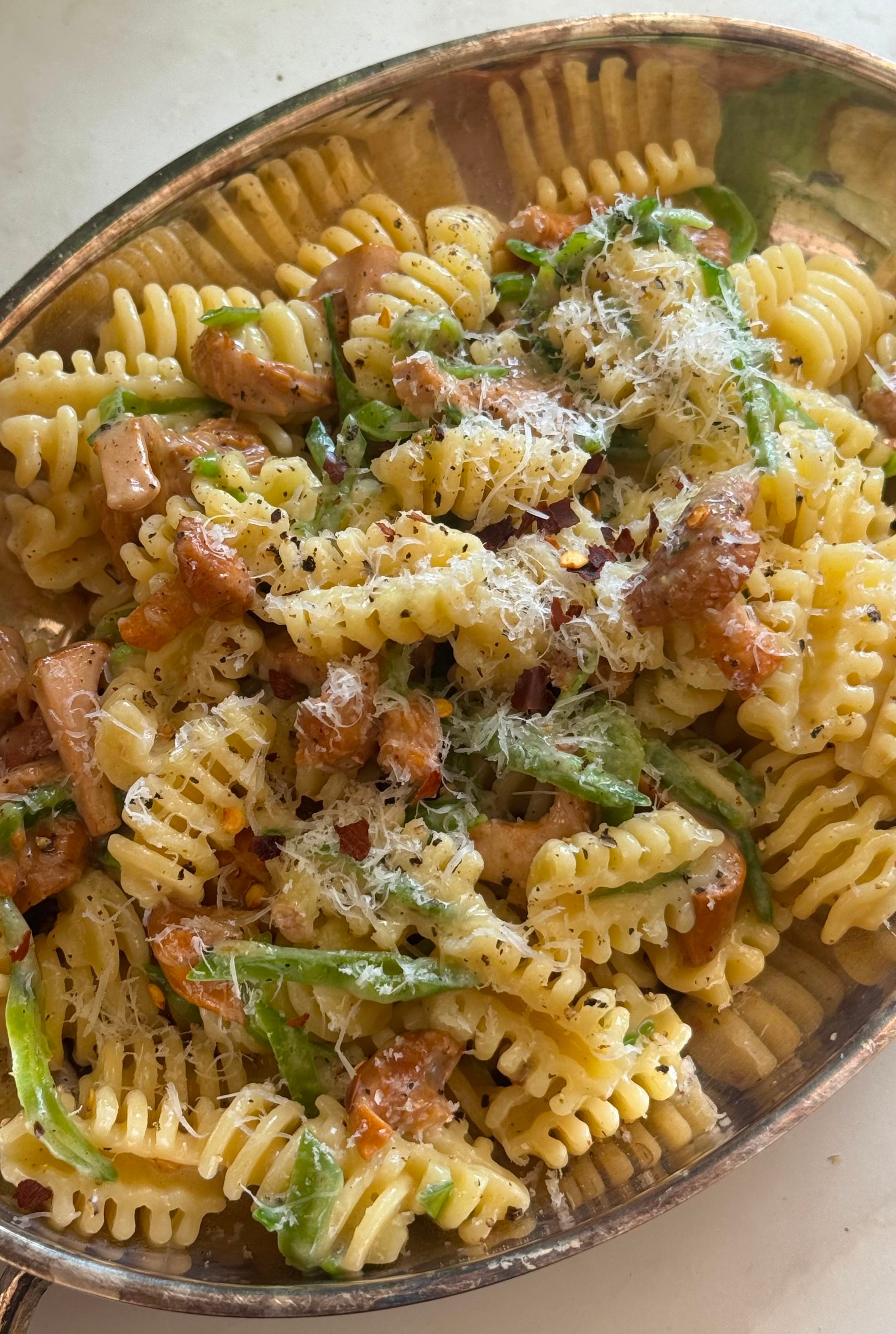
Its a delicate dish that gets its flavor from the savory mushrooms and the herbal tarragon. We’ve made it a few times at home now and its nearly perfect. This most recent time we added too much parmesan which made the sauce a little too cheesy instead of just silky. But don’t worry, I’ve adjusted for that below. My next venture will be working on my tarragon oil. I don’t think I had enough tarragon because it mostly just tasted like avocado oil and wasn’t as green as I’d hoped.
Serves: 2
Time: 30 minutes
Ingredients
2 servings radiatori pasta
1 tablespoon olive oil
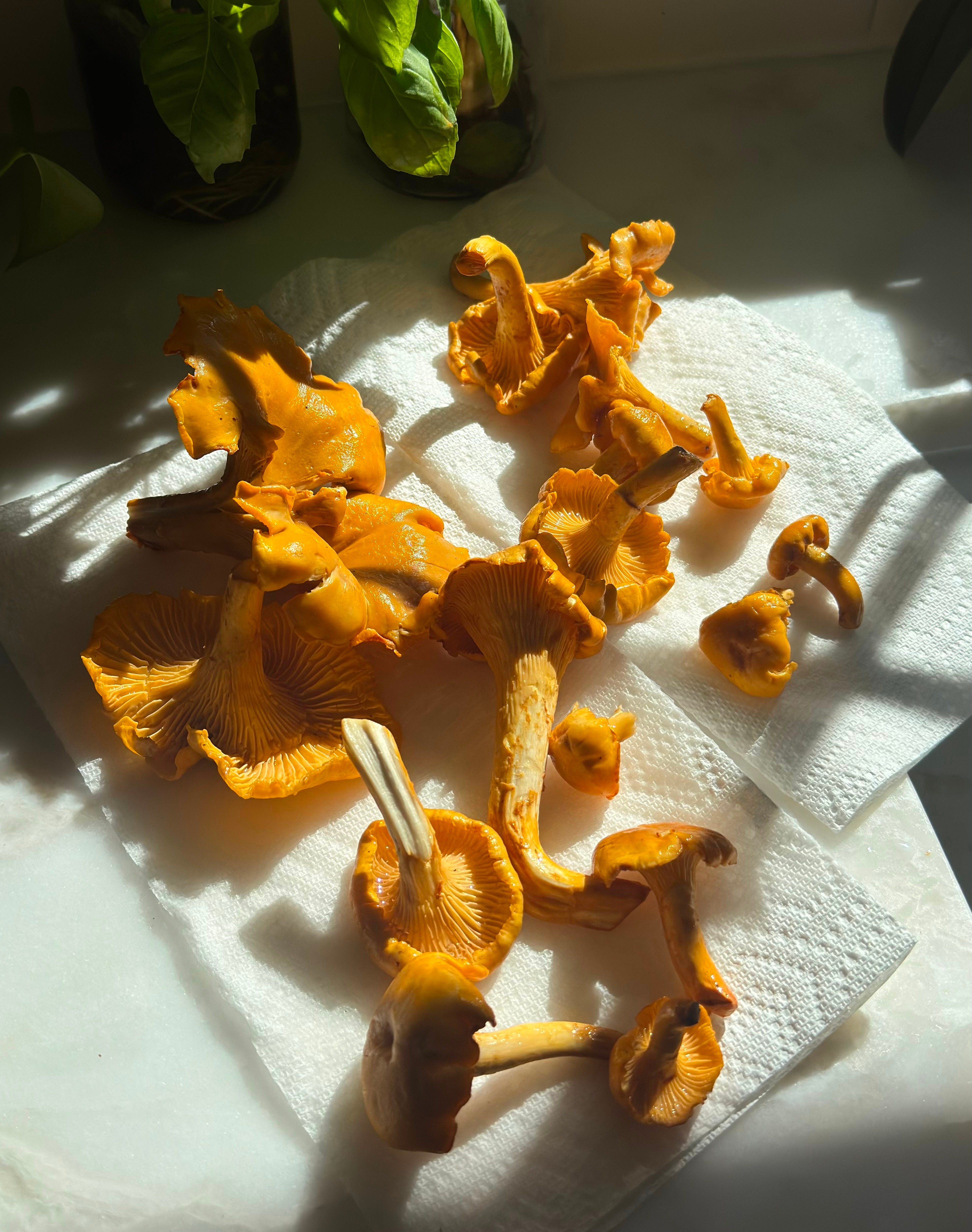
2 cups chanterelle mushrooms
1 cup snow peas, thinly sliced
3 tablespoons salted butter
1/3 cup freshly grated Parmesan, plus more for serving
2 tablespoons heavy cream
1 teaspoon dried tarragon or 1 tablespoon fresh tarragon
Freshly cracked black pepper, to taste
Red pepper flakes, to taste
Salt, as needed
1 cup reserved pasta water, as needed
For serving, optional:
Extra freshly grated Parmesan
Red pepper flakes
Tarragon oil
Instructions
Bring a pot of well-salted water to a boil. Cook the radiatori until al dente, according to package directions.
Before draining, reserve 1 cup of pasta water. Drain the pasta and set aside.
While the pasta cooks, clean the chanterelles and cut them into roughly 1–2 inch pieces. Smaller mushrooms can simply be halved, while larger ones can be quartered.
Heat the olive oil in a large skillet over medium heat.
Add the chanterelles with a small pinch of salt and spread them out across the skillet.
Cook for about 5–7 minutes, stirring occasionally.
At first, the mushrooms will soften and release some moisture. Continue cooking until that liquid has mostly evaporated and the mushrooms are tender with lightly golden edges.
You want them cooked down and beginning to brown rather than still looking wet in the pan.
Reduce the heat to medium-low and add the butter, tarragon, and sliced snow peas.
Cook for another 1–2 minutes, stirring gently, until the butter has melted and the snow peas are bright green and slightly tender but still have some bite.
Add the cooked pasta and about 1/2 cup reserved pasta water to the skillet.
Sprinkle in the Parmesan and toss everything together until the cheese melts and begins to form a glossy sauce around the pasta.
Add more pasta water, a splash at a time, as needed. The sauce should lightly coat the radiatori without becoming thick or heavy.
Stir in the heavy cream and season generously with freshly cracked black pepper and red pepper flakes.
Taste before adding additional salt — the salted butter, Parmesan, and pasta water may already provide enough.
Divide between bowls and finish with more freshly grated Parmesan and red pepper flakes.
If you decide to make tarragon oil, drizzle a little over each bowl just before serving.
Tips
Give the mushrooms time to brown. Chanterelles naturally release moisture as they cook. If you add the butter too early, they’re more likely to steam than develop those lightly caramelized edges.
Don’t overcrowd the pan. If your skillet is small, cook the mushrooms in batches. More contact with the hot surface means better browning.
Add the snow peas toward the end. They only need a minute or two. Keeping them slightly crisp gives the pasta a nice contrast to the tender mushrooms and creamy sauce.
Pasta water is doing a lot of the work here. Add it gradually while tossing so the butter and Parmesan emulsify into a glossy sauce rather than becoming oily or clumpy.
Fresh vs. dried tarragon: Fresh tarragon will taste brighter and more delicate, while dried tarragon is more concentrated. Either works well — just use the different quantities listed above.