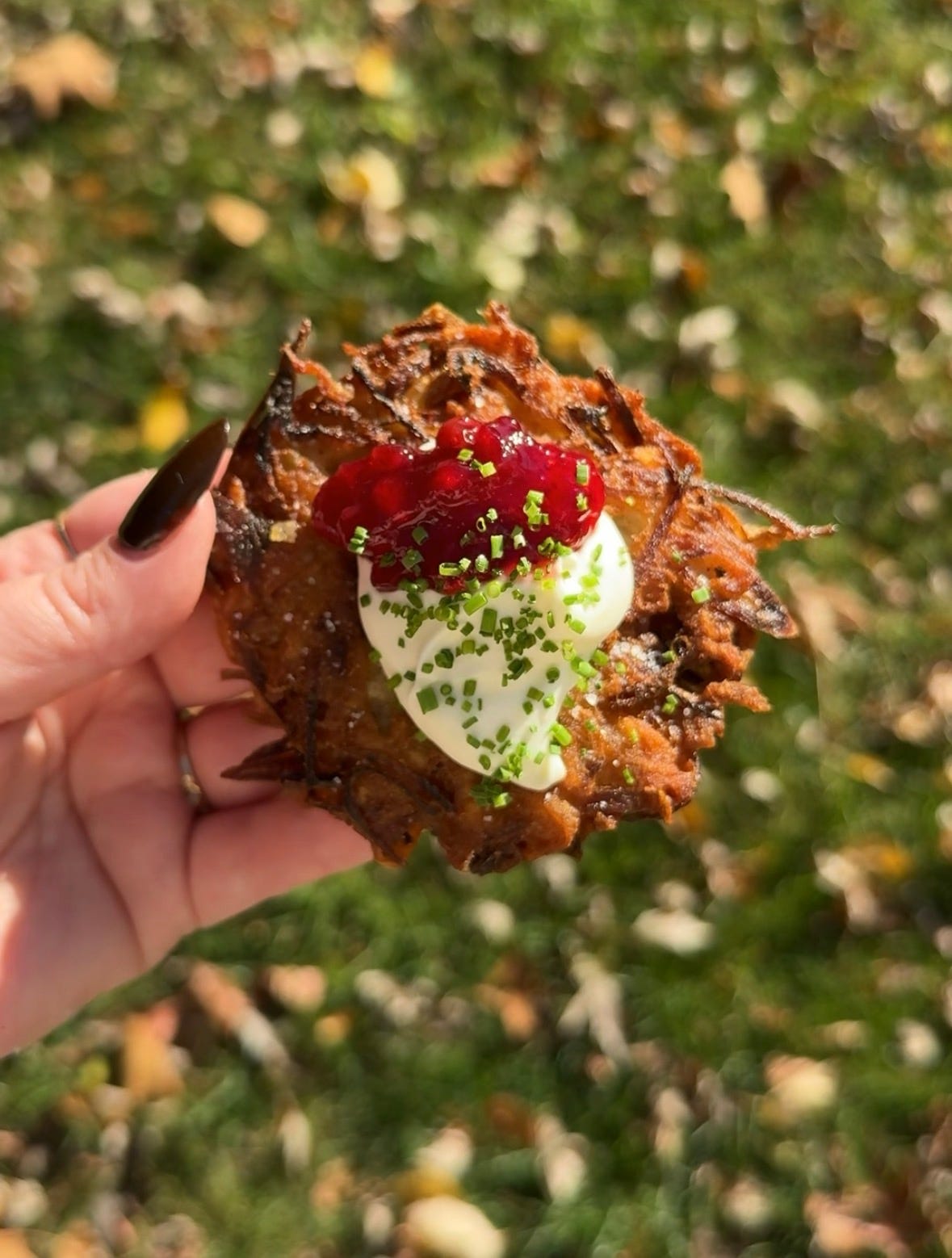
I had a surplus of shallots and a dream.
And while I’m not doing a full Thanksgiving menu this year (maybe next!) I would like to submit these as a perfect addition to Thanksgiving. You’ll likely already be peeling potatoes to be mashed. These can be made a day in advance and reheated in the oven. They’d be great for breakfast, an appetizer, or on your dinner plate!!
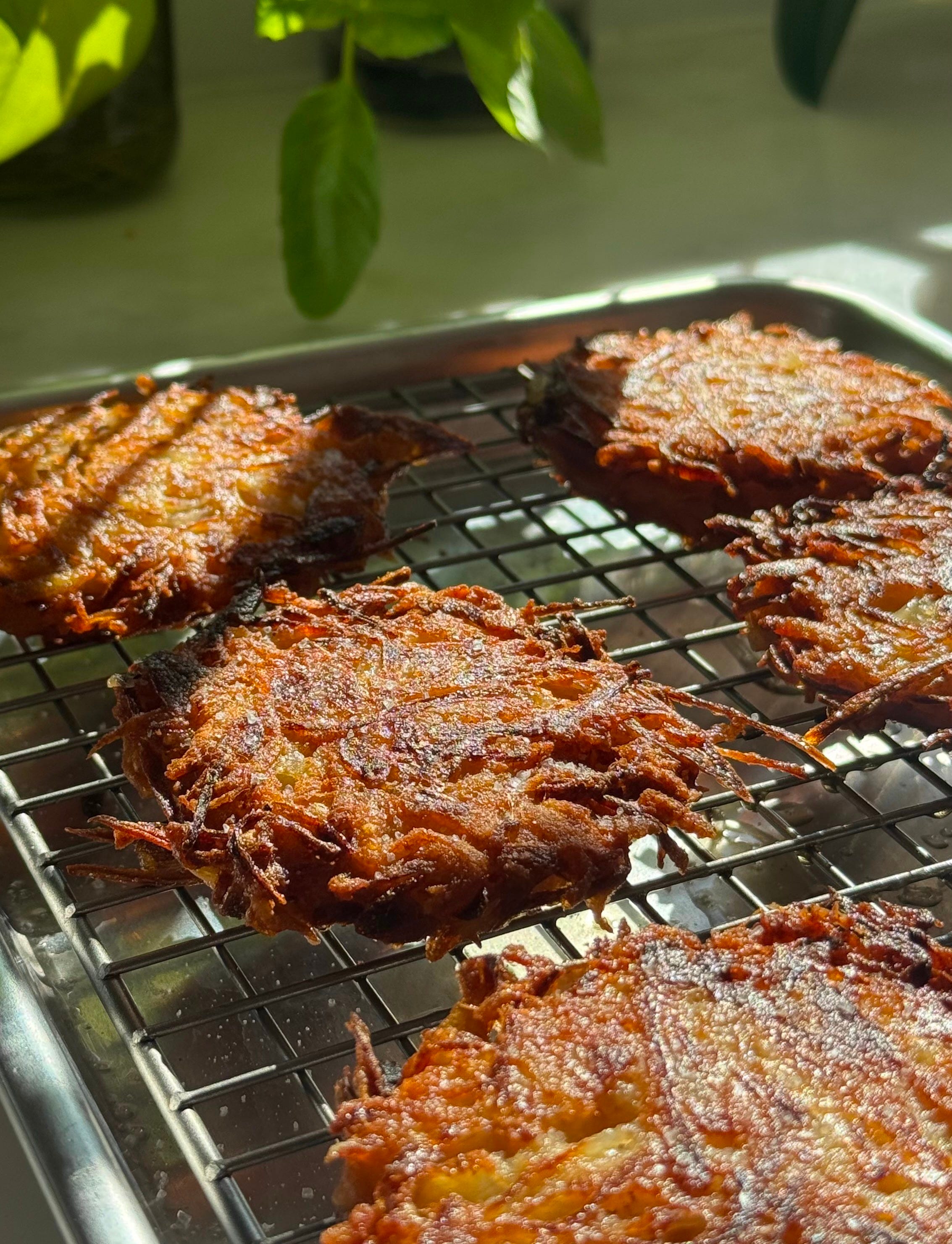
If you’re using them for a breakfast platter or appetizer, I’d suggest pairing with smoked salmon, caviar, creme fraiche, lingonberry jam or cranberry sauce, and chives. You could lean full classic latke and add applesauce!
And thinking of breakfast, these could be fantastic for breakfast with thanksgiving leftovers!! This, topped with ham, cranberry sauce, and a little gravy?? Yes.
Time: About 50 minutes
Yield: About 10 latkes
These crispy shallot and potato latkes are heavy on the shallot, with part of the shallot caramelized for sweetness and the rest left raw for sharper onion flavor and texture. The russet potato helps everything hold together while keeping the centers tender and the edges crisp.
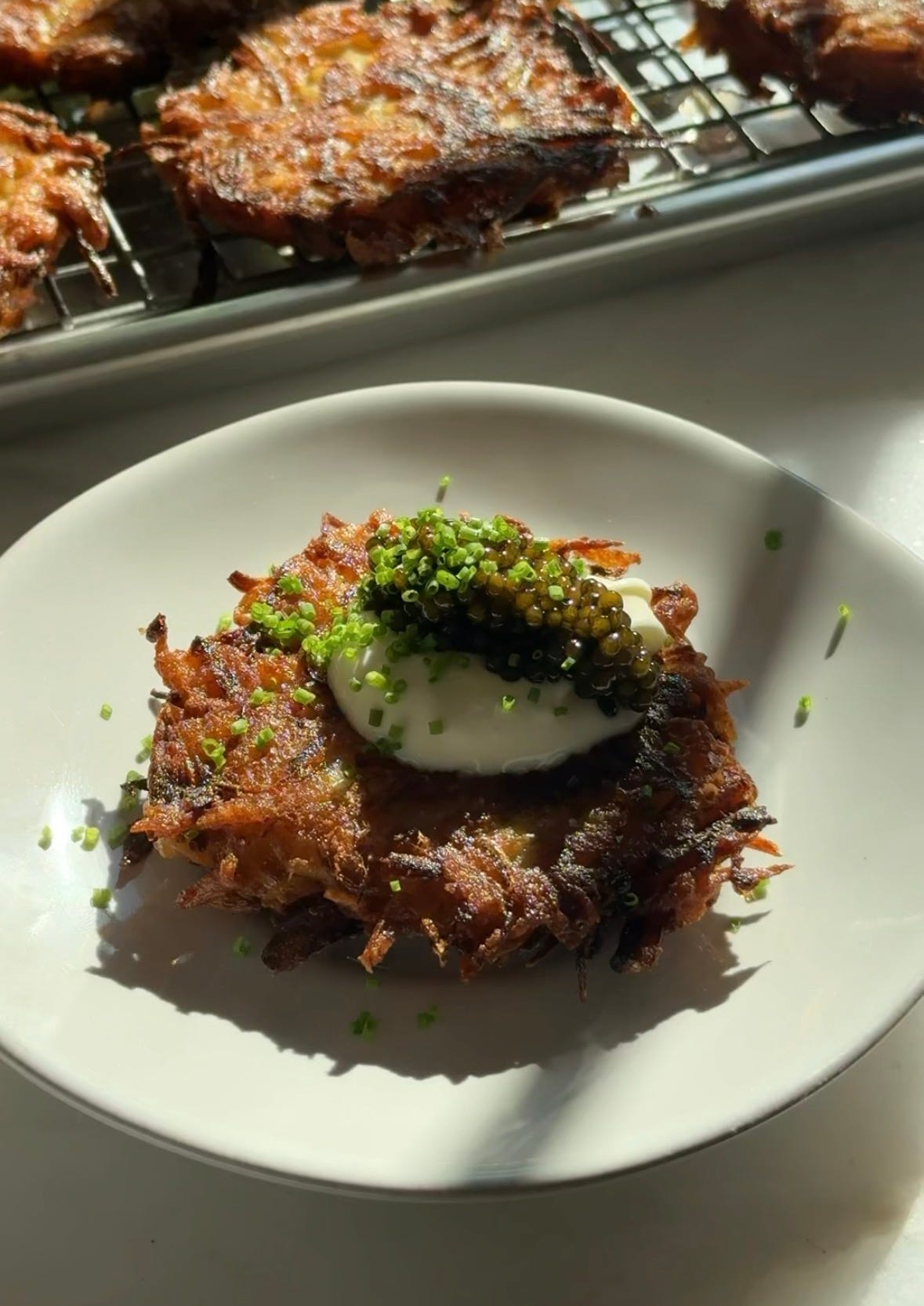
Serve them with crème fraîche and caviar for something savory, or lingonberry jam or cranberry sauce for a sweet-tart contrast.
Ingredients
300 grams shallots, thinly sliced, divided
300 grams russet potato, peeled
2 large eggs
2 tablespoons cornstarch
1 tablespoon all-purpose flour
Salt + freshly cracked black pepper, to taste
2 tablespoons butter
Neutral oil, for frying
For Serving
Crème fraîche
Caviar
Lingonberry jam or cranberry sauce
Finely chopped chives
Instructions
Caramelize part of the shallot. Set aside 100 grams of the sliced shallot.
Melt the butter in a skillet over low heat. Add the 100 grams of shallot with a small pinch of salt.
Cook slowly for about 20–30 minutes, stirring occasionally, until very soft, golden, and caramelized. If the pan starts looking dry, lower the heat rather than adding more fat. You can add a splash of water or broth to deglaze.
Remove from the heat and let cool slightly then finely chop.Prep the potato. Using the large holes of a box grater, grate the peeled russet potato directly onto a double layer of paper towels or a clean kitchen towel.
Gather the towel around the shredded potato and squeeze firmly over the sink to remove as much moisture as possible.
This step is important — drier potato means crispier latkes and less splattering in the oil.Add the shredded potato to a large mixing bowl along with the remaining 200 grams raw shallot, the caramelized shallot, eggs, cornstarch, flour, salt, and black pepper.
Mix everything together thoroughly, then let the mixture sit for 10 minutes.
Stir again before frying. The potato and shallot will release a little additional moisture as they sit, and the second mix helps redistribute the starches and binder.While the mixture rests, add about 1/4 inch of neutral oil to a large heavy-bottomed skillet.
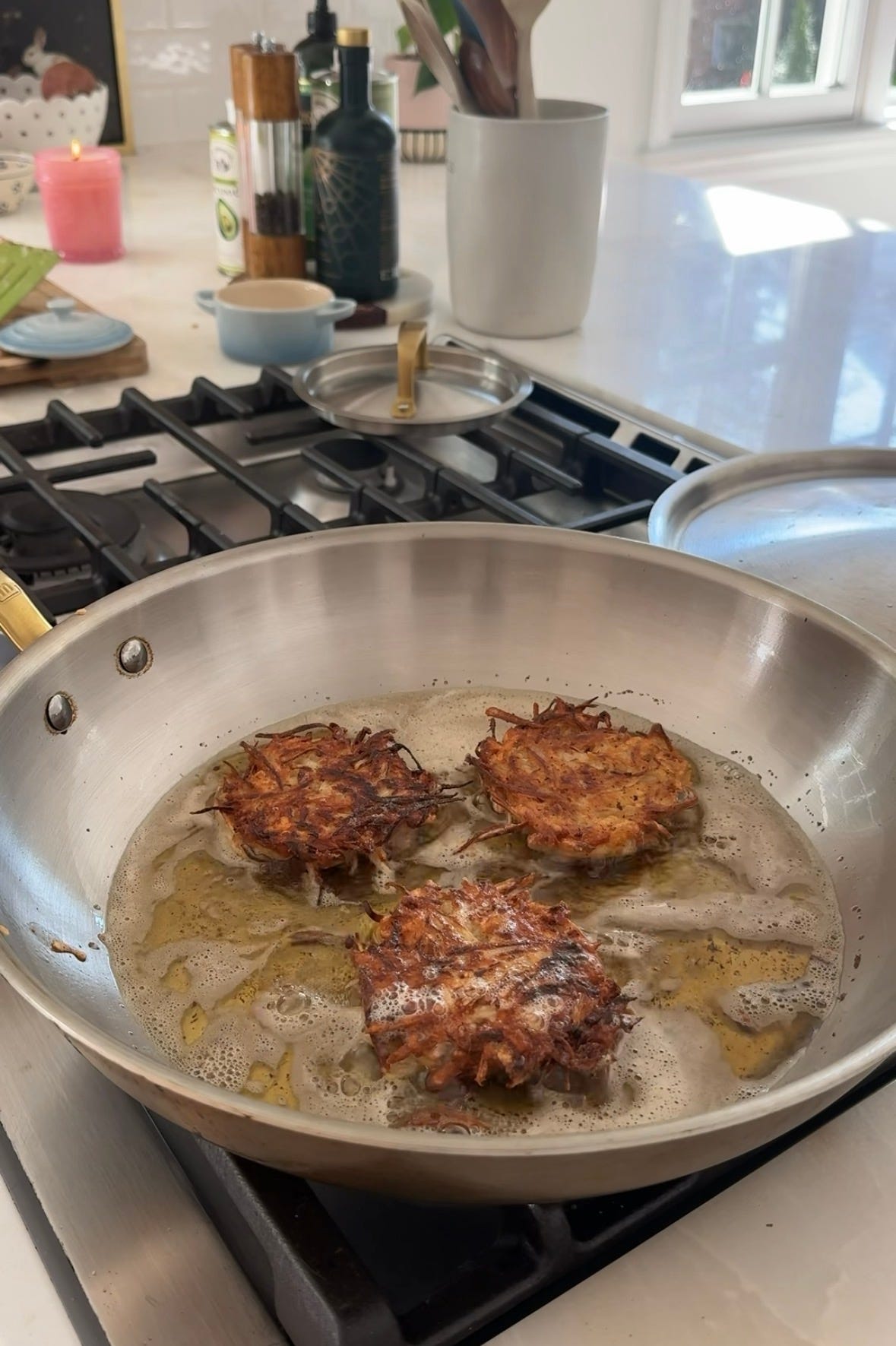
Heat the oil to 325–350°F.Scoop about 1/4 cup of the mixture and gently shape it into a disk about 1/2–3/4 inch thick.
The mixture does not need to feel like a smooth batter. It should be loose and shaggy, but hold together when pressed.Use a spatula to carefully slide the latke into the hot oil.
Repeat with a few more, leaving plenty of space between each one. Avoid overcrowding the pan — adding too many at once will drop the oil temperature and make the latkes greasier and more prone to splattering.Fry for about 3–4 minutes on the first side, or until the bottom is deeply golden and crisp.
Carefully flip and cook for another 3–4 minutes on the second side.
Adjust the heat as needed to keep the oil in the 325–350°F range.
Transfer the finished latkes to a wire rack set over a sheet pan or paper towels.
Season immediately with a small pinch of salt while they’re still hot.
Continue frying the remaining mixture in batches, allowing the oil to come back up to temperature between batches if needed.
Serve warm with crème fraîche, caviar, lingonberry jam or cranberry sauce, and chopped chives.
Tips
Squeeze the potato really well. Excess water is the enemy of crispness and one of the main causes of oil splattering.
The mixture should be shaggy. Don’t expect a smooth pancake batter. Once pressed into a disk, it should hold together just enough to transfer to the pan.
Watch your oil temperature. Below 325°F, the latkes can absorb too much oil. Above 350°F, the outsides may brown before the centers are cooked through.
Don’t make them too thick. About 1/2 inch is ideal for a crisp exterior with a tender center. Closer to 3/4 inch will work, but may need an extra minute per side.
Caramelizing only part of the shallot is intentional. The caramelized shallot adds sweetness and depth, while the raw shallot keeps the finished latkes savory and distinctly onion-forward.